
Meet the Confirmed Speakers and Workshop Leaders

Babette Renneberg
Babette Renneberg, Ph.D. is Professor of Clinical Psychology and Psychotherapy at Freie Universität Berlin, Germany. She is a licensed psychological psychotherapist, supervisor and trainer in CBT, head of the university outpatient clinic for psychotherapy at the Freie Universität Berlin and head of the ZGFU, a training institute for child and adolescent psychotherapy (CBT). Main areas of research: Basic research and intervention research on personality disorders, anxiety and depressive disorders. She is Principal Investigator of the German Centre for Mental Health, DZPG in Berlin.
Babette Renneberg was President of the European Society for the Study of Personality Disorders (ESSPD) from 2020 to 2022. In 2018 she received the award of the German Society for Behavioural Therapy for her innovative contributions to psychosocial interventions and prevention.

Michael Kaess
Michael Kaess is a Professor of Child and Adolescent Psychiatry at the University of Bern and serves as Director of the University Hospital for Child and Adolescent Psychiatry and Psychotherapy in Bern, Switzerland. He previously trained and advanced his career at the University of Heidelberg in Germany and the University of Melbourne in Australia.
Professor Kaess is a leading researcher in the field of adolescent risk-taking and self-harming behaviours, with a strong focus on the early detection and intervention of underlying mental health conditions, including affective disorders and borderline personality disorder. His research spans epidemiological, clinical, and neurobiological approaches, often integrating these domains to support the translation of scientific findings into clinical practice.

Philippe Conus
Philippe Conus trained at the University of Lausanne and specialized first in internal medicine and then in psychiatry. From 2000 to 2003, he worked in Melbourne and specialized in early detection and intervention in psychotic disorders. In 2004, he launched a similar early intervention program in Lausanne. In 2010, he was appointed Professor at the University of Lausanne’s Faculty of Medicine and became Director of the service of General Psychiatry at the CHUV. He is President of the IEPA Early Intervention in Mental Health association since January 2025.

Frank Yeomans
Dr. Yeomans, M.D., Ph.D. is Clinical Professor of Psychiatry at the Weill Cornell Medical College, Director of Training at the Personality Disorders Institute of Weill-Cornell, and Adjunct Associate Clinical Professor of Psychiatry at the Columbia University Vagelos College of Physicians & Surgeons. He is president of the International Society for Transference-Focused Psychotherapy, an Honorary Member of the American Psychoanalytic Association, and past Chair of the Group for the Advancement of Psychiatry Committee on Psychotherapy.
He received his undergraduate degree from Harvard College, his PhD in French Literature and his MD from Yale University, and his psychiatry residency training from New York Presbyterian Hospital, Weill Cornell Medical Center Payne Whitney Clinic.
Awards include the UCLA Department of Psychiatry Distinguished Psychiatrist Lecturer (2015), the Weill Cornell Department of Psychiatry Arnold Cooper Honorary Lecturer Award (2021), Doctor Honoris Causa, Universidad de Valparaiso (2022), and the University of Michigan Department of Psychiatry Kenneth Silk Lecturer Award (2023).
Dr. Yeomans’ primary interests are the development, investigation, teaching, and practice of psychotherapy for personality disorders. He headed the specialized unit for patients with Borderline Personality Disorder at the Weill Cornell Medical Center for ten years. He has taught and helped establish training programs for the psychodynamic therapy of personality disorders in many countries. He has authored and co-authored numerous articles and books, including A Primer on Transference-Focused Psychotherapy for the Borderline Patient; Psychotherapy for Borderline Personality: Focusing on Object Relations; and Transference-Focused Psychotherapy for Borderline Personality: A Clinical Guide, all co-authored with Drs. John Clarkin and Otto Kernberg. His most recent books are: Treating Narcissistic Pathology with Transference-Focused Psychotherapy, co-authored with Diana Diamond, Barry Stern, and Otto Kernberg; and Otto Kernberg: A Contemporary Introduction, co-authored with Diana Diamond and Eve Caligor.

Mario Speranza
Mario Speranza is Professor of child and adolescent psychiatry at the University of Paris-Saclay – Versailles and Head of the Child and Adolescent Psychiatry Department at the Versailles General Hospital. His clinical and research work focuses on emerging personality disorders in adolescence. He is actively engaged in promoting evidence-based interventions for adolescents with borderline personality disorder and their families.
He is a founding member of the French-speaking networks for Dialectical Behavior Therapy (RF-TCD), Mentalization-Based Treatment (RF-TBM), and Good Psychiatric Management (RF-GPM). He is the Past President of the International Society of Adolescent Psychiatry and Psychology and currently serves as a Member-at-Large on the board of the International Society for the Study of Personality Disorders, and as Secretary of the French-speaking section of the National Educational Alliance for Borderline Personality Disorder.

Andrew Chanen
Professor Andrew Chanen is Chief of Clinical Practice and Head of Personality Disorder Research at Orygen in Melbourne, Australia. He is also a Professorial Fellow at the Centre for Youth Mental Health, The University of Melbourne and a Board Director of headspace, Australia’s National Youth Mental Health Foundation. Andrew leads an internationally recognised program of research, treatment innovation, and service development in youth mental health and early intervention for severe mental disorders in young people.
Andrew established the field of early intervention for personality disorder and is a leading global advocate for effective, evidence-based policy. He has over produced over 250 scientific publications in high-impact international journals and has received competitive grant funding from the National Health and Medical Research Council, Medical Research Future Fund, and Australian Research Council. He serves on the Editorial Boards of several journals, and on expert national and international groups. He is a Past President of the International Society for the Study of Personality Disorders (ISSPD). His work has been recognised with several awards, including the 2023 ISSPD Perry Hoffman Award for Research, the 2023 Royal Australian and New Zealand College of Psychiatrists Ian Simpson Award, and the 2017 Award for Distinguished Achievement in the Field of Severe Personality Disorders from the Borderline Personality Disorder Resource Centre and Personality Disorder Institute, New York.
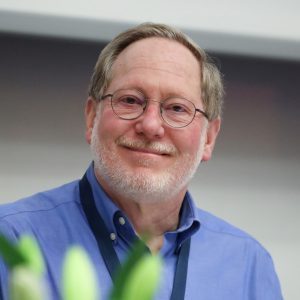
Alan E. Fruzzetti
Alan E. Fruzzetti, PhD, is a Research Fellow at the National Suicide Research Foundation, University College Cork, Lead for supervision & implementation for the National DBT Team in Ireland and Professor Emeritus at the University of Nevada-Reno. Alan is a co-founder of the Center for DBT and Families and the World DBT Association, a past-president of the National Education Alliance for Borderline Personality Disorder and is on multiple boards of directors.
He developed DBT for parents, couples and families and other successful DBT programs for people with suicidality, BPD and other problems with emotion regulation, including the free NEA-BPD Family Connections program for parents and partners.
His research focuses on the connections between emotion dysregulation and family processes and the development of interventions to help both individuals and relationships. Professor Fruzzetti has authored more than 135 research and clinical papers and book chapters, two books, testified to U.S. Congressional committees, and has lectured and trained professionals and the public in more than two dozen countries.
He received his BA from Brown University and MS and PhD from the University of Washington in Seattle. Alan is happily married to a very patient woman and has four wonderful adult children and one lovely granddaughter.

Stephanie Stepp
Dr. Stephanie D. Stepp is a Professor of Psychiatry and Psychology at the University of Pittsburgh School of Medicine. A leading expert in the development, prevention, and treatment of borderline personality disorder and suicide, Dr. Stepp’s research integrates developmental psychopathology, emotion regulation, and interpersonal processes across the lifespan. She has served as Principal Investigator on more than ten federally funded research projects, including NIH-funded studies focused on longitudinal mechanisms of suicide risk, parent-child emotion regulation, and digital interventions for at-risk youth.
Dr. Stepp is also a nationally recognized expert in Dialectical Behavior Therapy (DBT) and has led clinical trials evaluating DBT-informed interventions to reduce intergenerational transmission of suicide risk and to support implementation of app-based suicide prevention in paediatric primary care. She has authored over 150 peer-reviewed publications, and her work has been recognized by national and international awards, including the Weill Cornell BPD Resource Center Award. She previously served as President of the North American Society for the Study of Personality Disorders.

Patrick Luyten
Patrick Luyten, PhD is Professor of Clinical Psychology at the Faculty of Psychology and Educational Sciences, University of Leuven (Belgium) and Professor of Psychodynamic Psychology at the Research Department of Clinical, Educational, and Health Psychology, University College London (UK). He is also a Visiting Professor at the Yale Child Study Center, New Haven, CT, USA.
His main research interests are disorders from the affective spectrum (i.e., depression and stress- and pain-related disorders), and personality disorders. In both areas he is involved in basic research and in interventional research. His basic research focuses on the roles of personality, attachment and social cognition or mentalizing, i.e., the capacity to understand oneself and others in terms of mental states, in these disorders from a developmental psychopathology perspective. Dr. Luyten’s research is fundamentally translational, as he is interested in translating knowledge concerning the mechanisms involved in the causation of psychopathology. He recently published the Cambridge guide to mentalization-based treatment (MBT) with Anthony Bateman, Peter Fonagy, Chloe Campbell, and Martin Debbané (2023).

Bo Bach
Bo Bach, Ph.D., Dr. Med., is a professor of clinical psychology at the University of Copenhagen and a clinical practitioner at Slagelse Psychiatric Hospital, Denmark. He is co-author of the ICD-11 Personality Disorders: A Clinician’s Guide (Hogrefe), editor of ICD-11 Personality Disorders: Assessment and Treatment (Oxford), co-author of the Practitioner’s Guide to the Alternative Model of Personality Disorders (Guilford), and co-author of the Diagnostic Interview for Personality Pathology in ICD-11 (DIPP-11).
Bo is also co-chair of the World Psychiatric Association (WPA) Section on Personality Disorders, a former board member of the European Society for the Study of Personality Disorders (ESSPD), and serves on the editorial board for Personality Disorders: Theory, Research, and Treatment and Journal of Personality Assessment. He received the 2021 American Psychological Association (APA) Theodore Millon Grant for his contribution to Personality Disorder assessment. He served as consultant for the World Health Organization’s ICD-11 personality disorder workgroup and field trials. Bo’s major interests are meaningful differential diagnosis, human character, and how assessment of personality functioning may facilitate self-knowledge, psychoeducation, case-formulation, and motivation for treatment while demystifying and destigmatizing personality disorder.
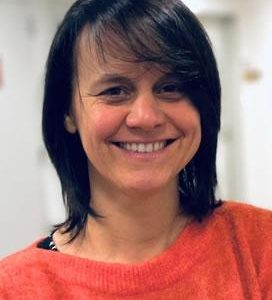
Barbara De Clercq
Barbara De Clercq obtained her PhD in 2006 and is currently a full professor of personality psychology at Ghent University, Belgium. Her career has been dedicated to promoting a developmental perspective on personality disorders, and she was among the first to investigate the dimensional structure of personality pathology in children and adolescents. She is recognized as an expert in age-specific assessment of Criterion B trait pathology prior to adulthood and developed an empirically grounded maladaptive trait taxonomy aligned with the DSM-5 Alternative Model of Personality Disorders.
Her work consistently emphasizes the importance of evaluating maladaptive personality manifestations in youth within the context of normative developmental tasks, environmental influences such as parenting and peer relationships, and situational triggers that activate personality vulnerabilities. She has a particular interest in longitudinal research on early temperamental and personality vulnerabilities, their etiological mechanisms in relation to Criterion A personality functioning, and the prognostic value of maladaptive traits in explaining why some children overcome their difficulties while others do not.
Throughout her academic career, Barbara has combined research with clinical practice in pediatric and adolescent primary health care. At Ghent University, she teaches courses on adaptive and maladaptive individual differences in infants, children, and adolescents, and she is passionate about mentoring PhD students in the field of personality disorders.
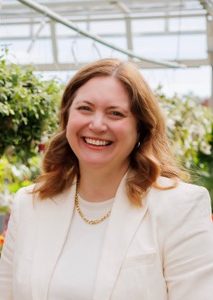
Shannon Sauer-Zavala
Shannon Sauer-Zavala, PhD, is an Associate Professor of Psychology at the University of Kentucky. Her research is focused on exploring personality-focused mechanisms that maintain psychological symptoms and using this information to develop more targeted, easily disseminated intervention strategies. Dr. Sauer-Zavala has co-authored over 160 peer-reviewed articles, book chapters, and books.
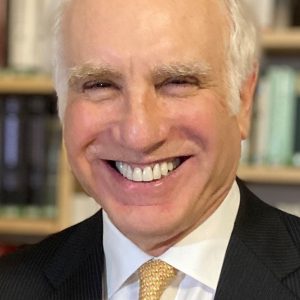
Richard D. Lane
Richard D. Lane, M.D., Ph.D. is Professor of Psychiatry, Psychology and Neuroscience at the University of Arizona. A clinical psychiatrist and psychodynamic psychotherapist with a Ph.D. in Experimental Psychology (systems neuroscience and emotion research), he was one of the first researchers to perform functional neuroimaging studies of emotion in the 1990s and continues research on the basic science and clinical applications of emotion to this day. Guiding themes in his research and scholarship have been the importance of integrating systems neuroscience with psychological conceptualizations and the need to bridge basic science and clinical application. These themes have driven his work on emotional awareness and alexithymia, the role of emotion in mind-body interactions including susceptibility to sudden cardiac death and the mechanisms by which memory and emotion interact to make enduring change in psychotherapy possible. In 2023 he was the Fulbright-Freud Visiting Lecturer in Psychoanalysis hosted by the Sigmund Freud Museum in Vienna and Fulbright Austria during which he did research and taught a course on memory reconsolidation interacting with emotion as a mechanism of change.
He is the author of over 220 papers and book chapters and is senior editor of two books (including Neuroscience of Enduring Change: Implications for Psychotherapy, Oxford U Press, 2020) which have collectively been cited over 46,000 times (Google Scholar). As an educator he served as director of the psychotherapy curriculum for psychiatric residents at the University of Arizona for over two decades and has received seven awards for teaching and mentoring. He was President of the American Psychosomatic Society in 2006, elected member of the American College of Neuropsychopharmacology, Distinguished Life Fellow of the American Psychiatric Association and elected Honorary Fellow of the American College of Psychoanalysts. In 2024 he received the Distinguished Scientist Award from the American Psychosomatic Society.